Feeds:
Posts
Comments

The New Challenge

Flickr Photo by Nirvana SQ

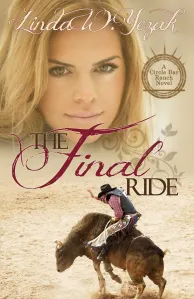
I’m excited. I contacted my almost-agent with news that Give the Lady a Ride is finished. She’s still interested in the novel and willing to help me pitch it to Love Inspired or Heartsong. All I have to do, she says, is to write up a book proposal and we’re in business.

Most of the elements of the proposal I can do–the one-liner, the back cover copy, the full synopsis. If it deals with the book, I can do it. I did most of it for the agent query anyway.  But there are several elements I’m worried about–seriously worried.

For instance, the Author Bio. I’m a Texas housewife. I have one husband, three cats and a pond full of ducks. What I don’t have is anything that makes me stand out as an author.

Then, there’s the “platform,” pubbing lingo for “marketing strategy.” How I would love to say that my manuscript has been presented to the Harpo Productions and will be featured in an up-coming Oprah show before she retires. That would make me a shoo-in for publication. Who needs advertising when you’ve got Oprah?

But I can do this. I can make what little experience I have, what little marketing platform I have and make them sound like I’m a go-getter. I know I can because–according to Sandy’s comment in my last post–I’m tough Jell-O. Strong enough to slap against the wall and bounce back.

Gotta love it.

Celebrating!

Flickr Photo: Balloons by ai.dan

I love my job. I’d love it better if it paid, of course, but how many folks get to wake up at 3:30 with enthusiasm like I did this morning? I’m talking about the kind of enthusiasm that stems from having a finished project, starting a new project, and realizing you’re suddenly in demand for other people’s projects. Let me tell you, it’s a great feeling!

Wednesday night around nine, I finished the rewrite on Give the Lady a Ride and sent it off to a friend to proofread–just proofread. I don’t want another critique. The novel is done, period. If I get it back in time, I’ll be sending it to my almost-agent right on schedule for my second self-imposed deadline of mid-February (the first was the end of January–which came and went with me still stewing over a tough spot in the novel). As I’ve said before, from there, it’s entirely in God’s hands. If the agent wants to pursue it, you’ll be hearing me holler. If not, well, that’s okay.
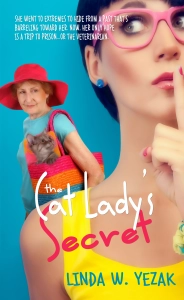
It’s okay, because I spent yesterday rereading The Cat Lady’s Secret (formerly The Cat Lady of Forest Lawn) and was happy with what I found. I had written 145 pages before stopping to work on Ride again, and while they’re rough in places, it’s a great little story. After reading about half of it and mulling it over, I was able sketch out what I want to do with it, and I’m excited with the results. Cat Lady will be a terrific mystery/romance!
Last year’s judges at the ACFW’s Genesis Contest had a point about the beginning of the novel, and I intend to rewrite it and resubmit it this year–so I really have to get moving on that. All they want is the first fifteen pages, but between the time I turn those pages in and the time they announce the runners up in May, I should be finished with the first draft. By conference time in September (if I’m blessed enough to be a runner-up again and blessed enough to be able to go), I should have the novel finished entirely.
That doesn’t mean I’m neglecting Roping Venus. My research is on-going, and I’m hoping to get enough information to be able to present both sides of the closed packing plants issue fairly and honestly. Just a reminder: animal rights activists worked to close the plants to save old and unwanted horses from becoming dog food or a source of meat for those starving in other nations (Mexico was a big recipient of horse meat). Everyone is sympathetic toward horses–how can you help it? But the ranchers are under pressure from activists and new laws to maintain their horses, even when the animals can no longer pull their work load. As a horse ages, it needs more attention from a vet–it can’t simply retire to a green pasture and live happily until it dies of natural causes. Many rescuers are seeing an increase of neglected animals because smaller ranchers and horse owners simply cannot afford the maintenance of their animals. It’s a sticky issue, and it’s separate from the wild horse issue of the northwest (which I’m also keeping a file on for the third in the Ranch, Rodeo and Revival series), and it deserves to be researched and presented fairly.
Finally in the list of things I’m excited about, I’ve picked up paying jobs editing work for others. Several friends send their work to me, and I to them, for critique and review. It’s just part of what we writers do for each other. But I’ve been surprised by a few acquaintances contacting me for the same purpose and willing to pay for my opinions and editing skills. I’ve never advertised that I do this, so I can only believe the Lord has something to do with sending them my way. Isn’t He great?!
Today, at least, I love my job. Considering how many times I’ve written posts crying about it, this one is a refreshing change.

Red Leaves, by Thomas H. Cook,  is the first book Donald Maass used as an example in his The Fire in Fiction, and believe me, Maass knew what he was doing.  On the cover of the 2006 edition of this book is Harlan Coben’s blurb: “One of the best novels you’ll read this year–gripping, beautifully written, haunting, surprising, and devastating.”

I can’t say it better.

This book, nominally a mystery, contains the type of writing serious novelists aspire to: deep, multi-faceted, gut-wrenching, heart-breaking. I read it with a highlighter and a notepad. I read exerpts of it to my writing class–this is how to do it. This is what we’re striving for.

The surface story is about the disappearance of an eight-year-old child, but if that’s why you’re reading it, you’ll be terribly disappointed.  There are no heroic sleuths in this novel.

Scratch a little deeper, and you may believe the story is about how a man deals with his son being the prime suspect in the child’s disappearance. Here, you’ll be closer to right.

The story is about a man who trudges through his life, like a hamster on a wheel, thinking everything is good, and discovers through a stinging slap on the cheek that what he believes–what he has always believed about his life and the people who populate it–is a lie. The story is about the pendulum of human emotion and the extremities to which it can swing; about the corrosive effects of suspicion; about the devastating results of living like an ostrich and the equally devastating results of discovering the truth.

This mainstream ”mystery” novel is literature at its finest.

Whenever I read something of this caliber, I’m in awe, and I see how far I have to go as a writer. It’s almost discouraging. I look at my own work and believe it’s good, until I read something like this and realize my work is just so much snail slime on paper.

But Thomas H. Cook wrote twenty books before this one came out; I’ve written two. I imagine he looks back at his early novels and believes they too were just so much snail slime on paper. Everyone starts somewhere.

Started shopping yet?

Just kiddin’.

Christmas is a far better subject than the “January in Review” post I’ve been planning, but here we go: January wasn’t too bad, but it could’ve been better.

I’m talking about resolutions, of course. I averaged C- last month and was only proud of my writing resolution. Well, until the last week of the month. I failed to work on my revisions all week, so I have to lower my overall grade to a D.

My house is clean on the surface, but I haven’t kept my promise to begin spring cleaning early this year. On the other hand, what’s left of the dust bunnies have begun to cower and tremble when they see me coming. I’ve become a woman with a mission when it comes to diminishing their population.

I dropped four pounds, but that’s a far cry from the twelve I was hoping for. And besides, it’s the same four pounds I mentioned early last week, so I didn’t even lose in the last week of the month. Didn’t gain either. I guess I can take comfort in that.

Where does motivation come from? How do you get yourself as excited to do the things you have to do as you are the things you want to do?

My pinkie promises are going far better than any of the others, so that may be part of the answer. If someone is holding me accountable, I’m more likely to do what I ought.

My health isn’t a motivator unless something scary or serious is happening. So the idea that maybe someday I might become a diabetic or suffer some other weight-related illness doesn’t quite cut it as a motivator for dieting. Especially since I love to cook far more than I love diet. But running out of closet space because I might someday fit into that size again, but meantime I need this size–that’s a motivator. When I consider that the range of sizes keeps growing I can really get motivated.

This is the first Monday of a new month, which always seems to motivate me for some reason. It started off great. I got sidetracked somewhere along the way and didn’t get this post done early enough to suit me, but other than that: so far, so good. My house is clean, the laundry is done and the dishes are drying–and I can feel my weight dropping by the second. It’s gonna be a great month!

What can a writer learn from a piece-of-fluff chic-flick? Among an amazing number of other things, the answer is rounding out a character fully in one scene–or nine minutes in the movie.

Primarily through dialogue, the 1989 flick, “Troop Beverly Hills,” presents three characterization tools: contradiction, conflicting perceptions, and comparison.

The film opens with the big boss of the Wilderness Girls squaring against Velda Plendor (one of two antagonists), a militaristic frontierswoman who wants to eliminate the young debutantes of Beverly Hills from the Wilderness Girls Organization. The chief reads aloud an application for the position of B.H. troop leader filed by our protagonist, Phyllis Nefler (played by Shelley Long).

As she reads the application in the WGO meeting, the camera is on Phyllis in her world–Rodeo Drive–and the first characterization tool is illustrated: Contradiction.

According to the application, Phyllis Nefler is interested in community affairs. According to the camera, community affairs pertain to who in local society is fooling around with whom, and all the accompanying gossip. According to the application, Phyllis is thrifty. According to the camera, her definition of thrift is to save $600 off a $5600 beaded gown by pointing out the unnoticeable absence of a single bead. How Phyllis presents herself contradicts who she is: a spoiled rich woman.

When Phyllis arrives home with her goodies from her most recent shopping spree, we learn more about her through the second tool employed: Conflicting perception.

Phyllis’s soon-to-be-ex husband and the second antagonist, Freddy Nefler (played by Craig T. Nelson), is on the scene to add an exclamation point to what we’ve learned about his extravagant almost-ex wife: All she knows how to do is to spend money. According to him, he makes it, she spends it. According to her, she spends it for his benefit: Maintenance of the Beverly Hills image he strives for. You never give me credit for what I do, she yells. You never do anything, he shouts. Each have different perceptions of reality.

As they argue with each other, Freddy utilizes tool number three: Comparison. In this case, the writers compared then with now. Freddy remembers that when he married her, Phyllis was bright, loving, caring, funny, full of potential and energy.  “You were so creative, I couldn’t wait to see what you’d do with it. Now I know what you did with it: You went shopping!”

The key to all three characterization tools is conflict: conflict between perception and reality, conflict between two characters’ perceptions, conflict between what was and what is. And the conflict is best and most concisely presented through dialogue, not backstory, because through the dialogue we learn so much more than just who the main character is. In the movie, we learned that Velda, an exaggerated villain for comedy’s sake, really hates Beverly Hills girls. We discovered that Freddy, a sympathetic antagonist, misses the woman he married. We also learn that Phyllis signed up to be the B.H. troop leader but neither her husband nor her daughter believe she’ll see the project through because “you’ve never finished anything!”–which presents the plot, story conflict, protagonist’s goal and the beginning of the character arc.

Granted, it would take a novelist longer than nine minutes to present all this, but a book’s opening scene can present it all if everything the author writes serves double duty. No wasted words, sentences, paragraphs. Everything serves to ground the reader in the story.

So, write, edit, rewrite, re-edit, polish, buff and shine your openers until they’re at least as good as a piece-of-fluff chick-flick!

Maass’s Average Joe

If it weren’t for the amount of time I’m going to spend singing the praises of a writer named Thomas H. Cook, I would’ve titled this post: The Failure of Resolution #5.  Res. 5 goes something like this: “I will read every book Donald Maass used as an example in The Fire in Fiction.” I made this New Year’s promise before I realized that the Nacogdoches Library has fewer books than Maass used in his how-to. But I’m off to a decent start–I’m in Chapter Seven of Cook’s Red Leaves, the first book Maass mentioned.

I know what you’re thinking: “Linda, Linda, Linda! It’s the end of the month! Surely you could’ve read the first three novels by now.” Yeah, well–have I mentioned lately that I’ve been really busy trying to get my own manuscript Maass worthy?

Maass begins his Fire in Fiction talking about flawed heros and average Joe protagonists, and Cook’s Eric Moore fits the bill for Maass’s average Joe. Eric has a good job, a nice home, a loving wife, and a typical (read, “sullen”) teenage son. He goes to work every day, comes home every evening, grills in the back yard and keeps company with his family and brother. Eric thrives in the rut of his ordinary life.

At first, the only thing that clues you in to the idea his ordinary life is about to be shattered is the fact that Red Leaves is a mystery. Once you’ve read the back cover, the introduction to Part One takes on a whole new tone: ”When you remember those times, they return to you in a series of photographs.”

Cook writes the entire intro using second person. “You see Meredith on the day you married her,” “You buy Meredith a ring on your fifteenth anniversary,” “You buy your son a simple, inexpensive bike.”

The feel is that of someone sitting alone, maybe cooling a cup of coffee or swirling the ice in a glass emptied of its Scotch, desperately trying to figure out what went wrong. Cook’s use of ”you” emphasizes Eric’s ordinariness while indicating that what is about to follow could’ve happened to anyone–even “you.”

The tone reminds me of Holly Golightly looking for her cat in Breakfast at Tiffany’s–the scene near the end of the movie, when it’s raining and Holly is crying and calling for Cat, and Fred/Paul is watching her break down. But it’s not the action that Cook’s introduction reminds me of; it’s the music. Strains of “Moon River” played so discordantly, your shoulder blades scrunch against the notes–the musical score that announces: “Something’s very wrong here.”

Maass could’ve used Cook as an example for everything from creating tension in the most mundane scenes to making absolutely every word count (something Brohaugh would applaud). Thomas Cook is a six-time nominee for the Edgar Allan Poe Award and won the Edgar for Best Novel (the Chatham School Affair). The man’s writing is amazing and I can certainly see why Maass chose his book.

Miracles Do Happen

I spent from last Wednesday through Saturday with Mom. It’s possible that some of my readers don’t know what this means, don’t know I’m on a diet or haven’t yet had enough coffee to connect those two points, so let me enlighten you: I can gain five pounds just breathing the air in Mom’s house.

As I’ve said before, it’s not because she cooks–her oven holds magazines and calendars and things she wants to hide from the housekeeper. No, I gain weight because of all the molecules of pizzas past floating in the air. Ghosts of double meat cheeseburgers with bacon and spicy curly fries. Fiesta-inducing burritos, tamales and fajitas. Foot long hot dogs with chili and cheese and onions, and equally nourishing sides of tater tots swimming in processed cheese.

It’s a junk food paradise, and I’m the original junk food junkie.

But pat me on the back and applaud my success, ladies and gentlemen: I lost two pounds last week!

That brings me to a grand total of four so far this month. Don’t ask me how. Maybe some of the things I’ve crammed in my face are just taking their time attaching to my thighs and registering on the scale. One of MSB and my friends snuck some donuts into the truck last week. Two dozen. A dozen for each of us! I did my part not to let mine go to waste, although I should’ve concentrated on not letting them go to waist (har-de-har-har).

Not only that, the wonderful folks of IHOP put up a restaurant right close to Mom’s house. Pancakes–with way too much butter and enough syrup to host the America’s Cup competition.

But I must’ve exercised enough (yes, I exercised. Walking counts as exercise) to work off all those useless calories and keep only the ones which are approved by the AMA and the food police.

Mom had enough energy this visit to want to do something different. Something she hadn’t done in quite a while. Something informative, educational and fun.

She wanted to go to the grocery store and shop the frozen food section.

Thank our Heavenly Father above for those little electric carts. We went up and down the aisles looking for nutritious foods for her to zap in the microwave, did a ring around the produce section (where she actually bought fresh fruit. Give the lady a hand, folks!), through the bakery and out again in just under one hour and forty-five minutes. Let’s just say she had a lot of exploring to do. Of course, she got a kick out of driving the scooter too since she hasn’t driven her car in years.

All in all, I’m proud of both of us. I didn’t meet all my resolutions last week–big news, huh?–but I still have to give myself a C+ for dropping two pounds in the most adverse of situations.

(Flickr photo by the punch pizza)

Rookie Mistakes

Al_HikesAZGive the Lady a Ride was the result of my failed 2007 NaNo attempt. Want to know why I failed? I got so excited about my subject, I wanted to research it. So I did. Trust me, that amount of time not writing is guaranteed failure in a contest where word count is everything.

Instead of competing in NaNo, I interviewed a former bull rider, visited a rodeo ranch, watched calves being tested for the bucking abilities, studied tapes of bull riding, attended a cattle auction and interviewed the ranchers, cowboys and auction workers on the scene. I did a lot of foot work, and I’m proud of the authenticity it gives my novel.

There’s only one problem: I wanted to include absolutely everything I had learned in my book. You’ve heard of information dumps? Well, I’m guilty of a research dump. I found the world of ranching and bull riding to be fascinating and didn’t want to leave out a single detail for my readers. In doing so, I lost sight of the plot. Give the Lady a Ride is a romance. The plot, dictated by the genre, is: Boy meets girl. Boy loses girl. Boy gets girl back.

In her letter rejecting my submission, the editor of White Rose Publishing actually counted how many times my main characters shared a scene in the five chapters I sent to her, and the result was not pretty. It’s cool that she read all five chapters and took the time to respond, but the point is: Ride is a romance, not a college course on bull riding or ranch management.

I needed to weave my research into the story just enough to create the authenticityI was seeking, to give the reader a feel for the setting, the life, the activity. Don’t get me wrong–the research was vital. I’m not saying cut corners doing it. I’m saying it’s not necessary to write into your manuscript, in detail, everything you’ve learned.

I went back this past weekend and axed twenty-seven pages worth of research dump. The pages read well. The characters were active and engaged. Tension and conflict and all the wonderful stuff that makes a good novel better flowed through the scenes. What they lacked was a point. What they failed to do was to move the characters forward. I took out all those pages without affecting the story. The reader will never miss them. Heck, I don’t miss them!

 *Flickr photo, “Bustin’ Out of the Chute” by Al_HikesAZ

Yes, I’m at it again–complaining about the weather. I know there are tons of folks out there who’d love to trade places with me this week while it’s so warm here, but a Facebook friend of mine sent me a picture making me wish I could trade places with her. Never mind the fact I’d have to go to the UK to do it. That’s just a bonus.

So, complimentary of Yvonne Lee, of Nuneaton, UK, in the English county of Warwickshire, I offer you a “proper snow”:

No Change

Last week, I gave myself a C- for my resolution-keeping abilities of the previous week. This week, the grade stands. I still can’t get myself to exercise.

Why can’t I count getting out of bed as exercise? I mean, think about it: It strains virtually every muscle, particularly the brain as it whines, “Oh, no! Just five more minutes. Pleeeease???” Really. My whole body is fighting a losing battle against the alarm clock. I oughta get combat pay.

(Flickr photo by DRB62)

I did manage to lose a pound last week. Don’t ask me how since I suffered a Frito set-back and a cupcake disaster. However, my goal is to lose three pounds a week. I’ve lost a pound a week, which means that I’ve only lost two pounds–which I can regain upon walking through Mom’s door–which I’ll be doing Wednesday. By the time I leave Bryan, those lost two pounds will have returned with at least a half-dozen friends.

Wait, I feel another whine coming on.

I am totally convinced that New Year’s resolutions are the devil’s tool which we voluntarily use to beat ourselves up. We set goals for ourselves and feel like fodder for earthworms when we don’t meet them. That’s why it’s good to give ourselves one resolution we look forward to keeping. Mine is writing.

Yeppers, for the second week in a row, I managed to write or do something writing-related every single day. Granted, by the end of the week, I was pretty disgusted with my results and had a whining session here in Peppermint Place, but by the end of the weekend, I was tickled pink with the revisions to my rewritten material and the progress I’d made. I am now almost one half done. After a couple more hurdles, I should be finished and able to send Ride off to my almost-agent for her to decide whether it’s worth further effort. I may even meet my goal of the end of the month. Of course, if I don’t make it, I’m sure to make my contingency goal of the end of next month. (Don’t you love back-up plans?)

I’ve kept my pinkie promises to Annie, Shaddy and Sandy, and my writing is coming along just fine, thank you. But my grade overall still stands at C-.

Older Posts »